How Minuttia studied 115,078 AI answers with Convex Works




Minuttia is a SaaS SEO and AEO agency working with companies such as Toggl, ServiceTitan and Docebo. In Q3 2026 we ran two data studies together on how software brands appear in AI search. Minuttia brought the questions and its knowledge of AI search, and wrote and published the studies. We did the research: the dataset, the collection of answers and the analysis.
The first one went very well. We already use it with clients and prospects, in content pieces and in presentations.
Minuttia’s first study: AI search visibility
Minuttia wanted to know which software brands appear in AI answers, which websites those answers cite, and how both relate to Google rankings and G2 reviews.
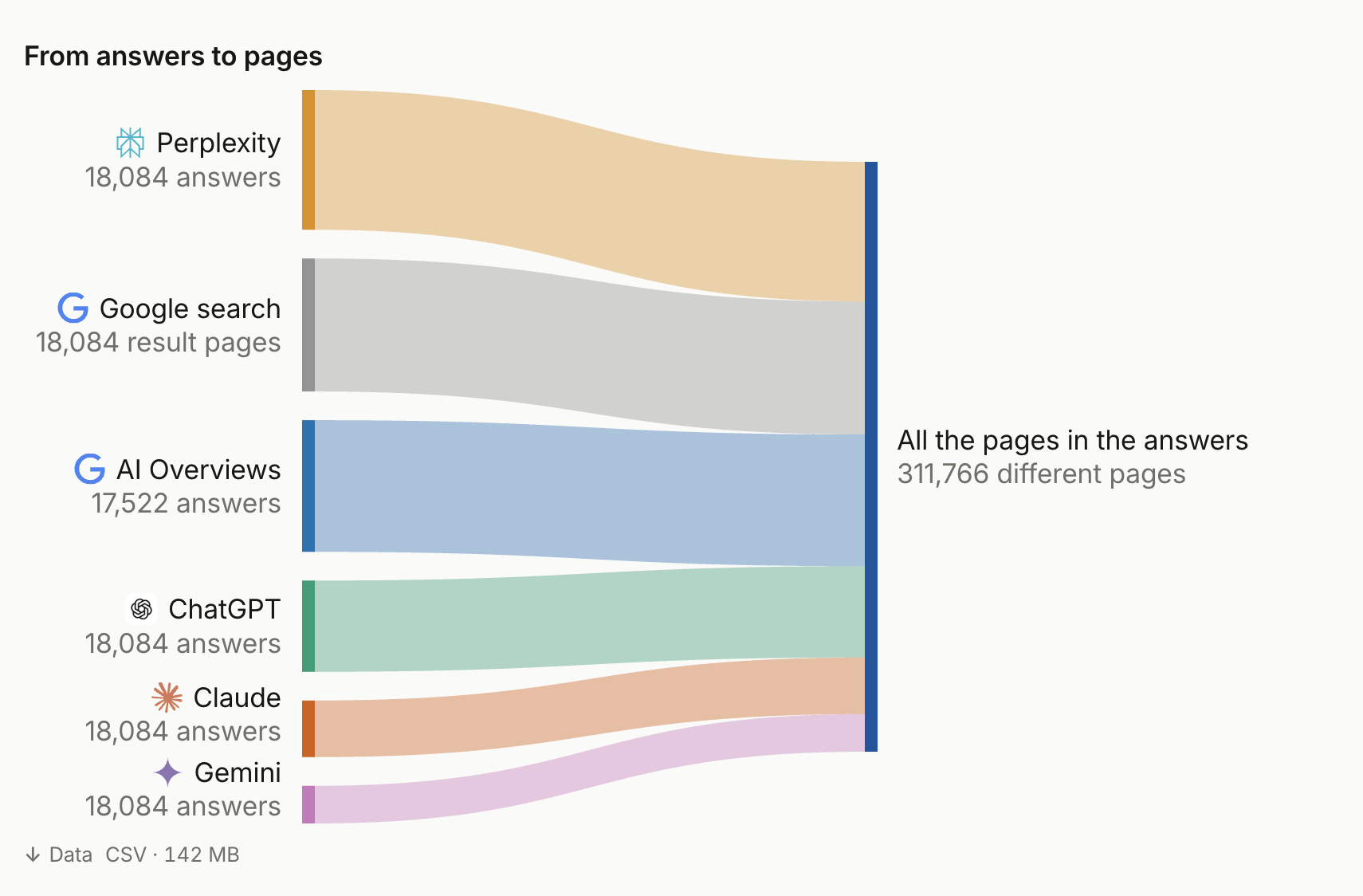
No ready-made dataset could answer this, so we built one. We took almost 6,000 software brands and asked about them the way a buyer would, in ChatGPT, Gemini, Claude, Perplexity and Google. Two weeks later we had 115,078 answers.
The easy way is to ask through each AI company’s API. But the API can give different answers from the app people use, so we collected from the apps wherever we could.
The answers are written text, so the real work was making them countable. Software brands appear under many names, so we built a list of almost 24,000 name variants to recognise them, and matched every cited link to its company. For questions comparing two products, we used AI to read each answer and record which product it favoured. Every chart in the study comes from those counts.
Minuttia published the study in September at study.minuttia.com. Readers can download the data behind every chart, and a separate page explains the method and its limits.
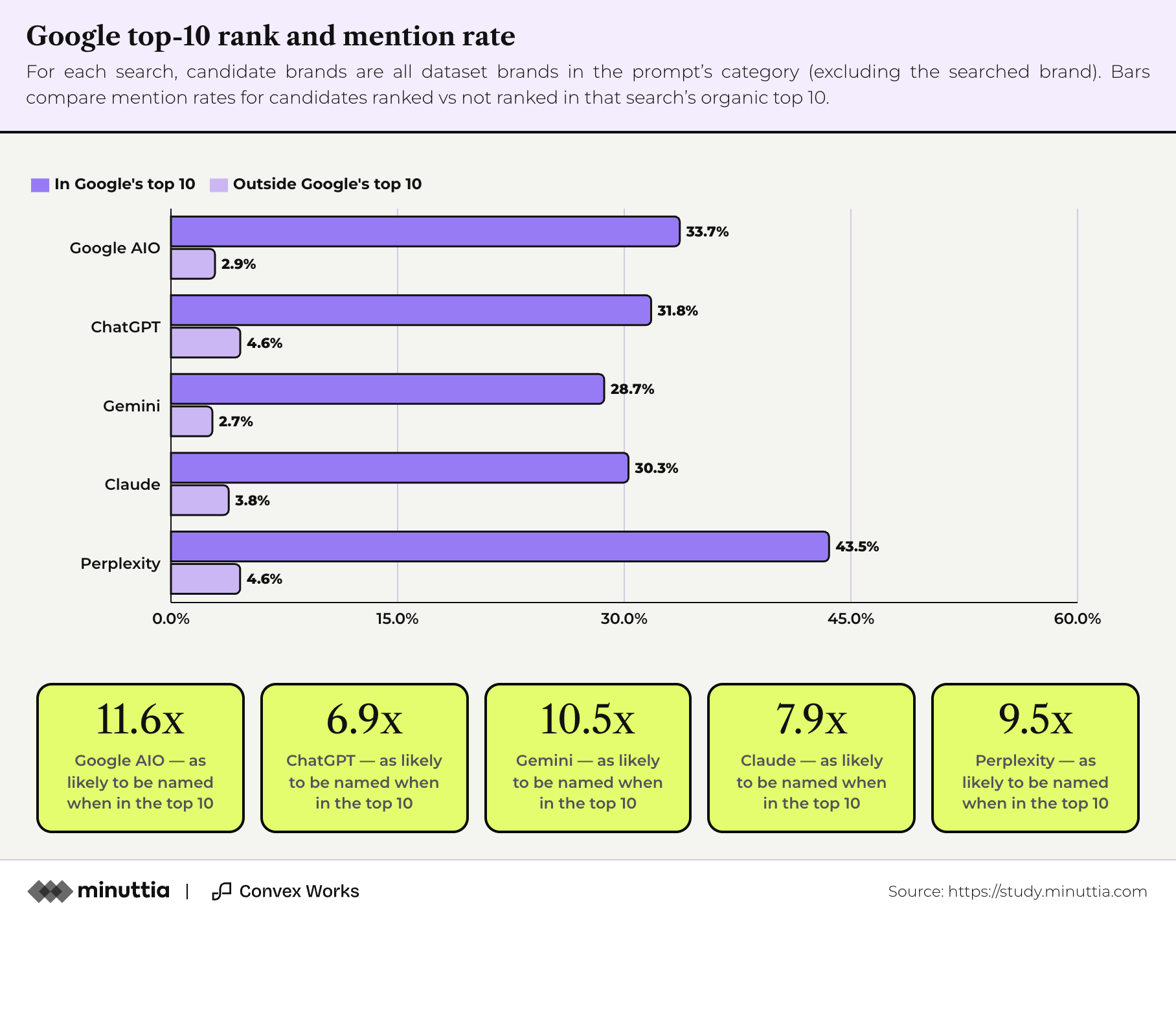
One of its findings: brands that rank in Google’s top ten for a search are about 7 to 12 times as likely to be named in the AI answers for the same search.
George announced the study in his newsletter, GrowthWaves. A week later the agency Mighty & True wrote a full article on the findings. Minuttia lists the study on its homepage, and George has used it in talks in India and Iceland.
Minuttia’s second study: self-promotional content
For the second study, Minuttia wanted to know how often AI answers cite a company’s own list of the best tools in its market, with its own product on it. We found this a little absurd, and very common.
Seeing the quality of the first study, I think we can make something the whole industry will talk about.
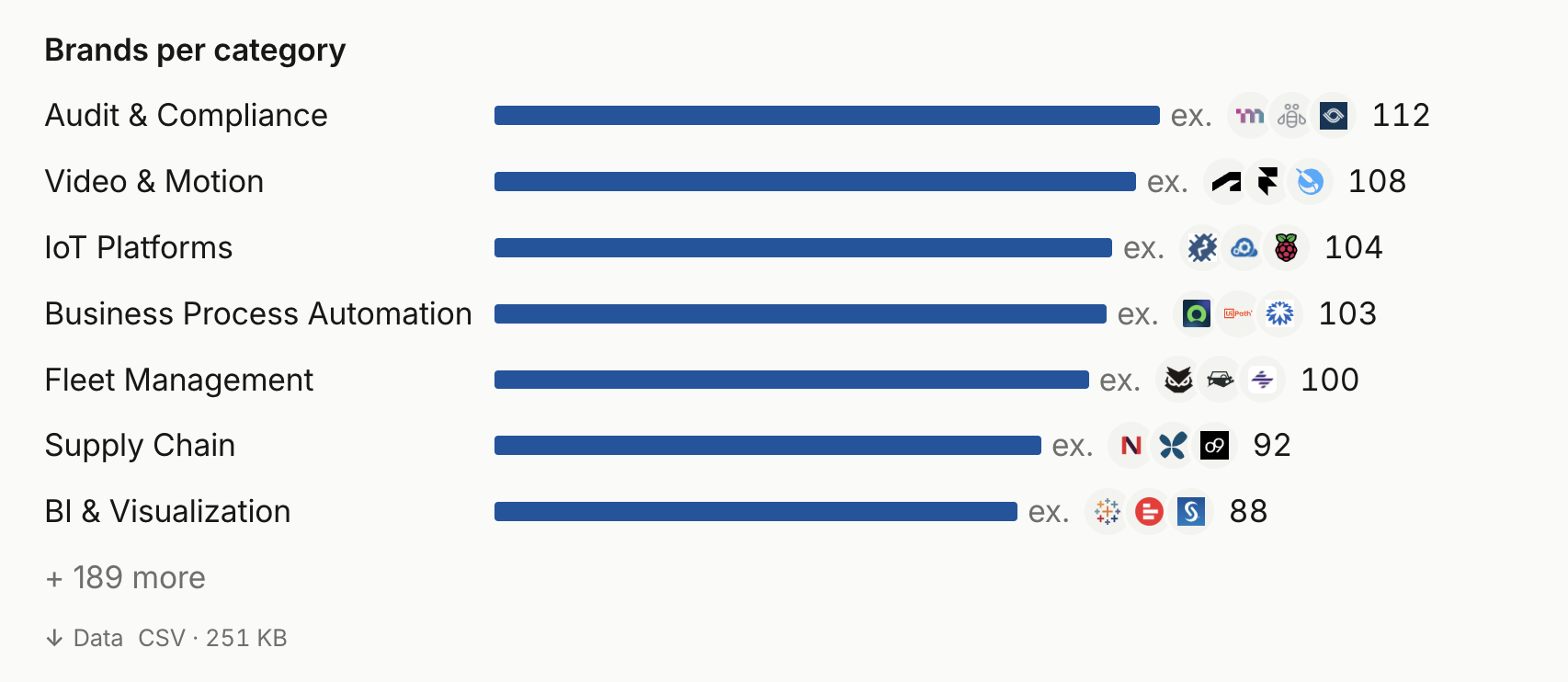
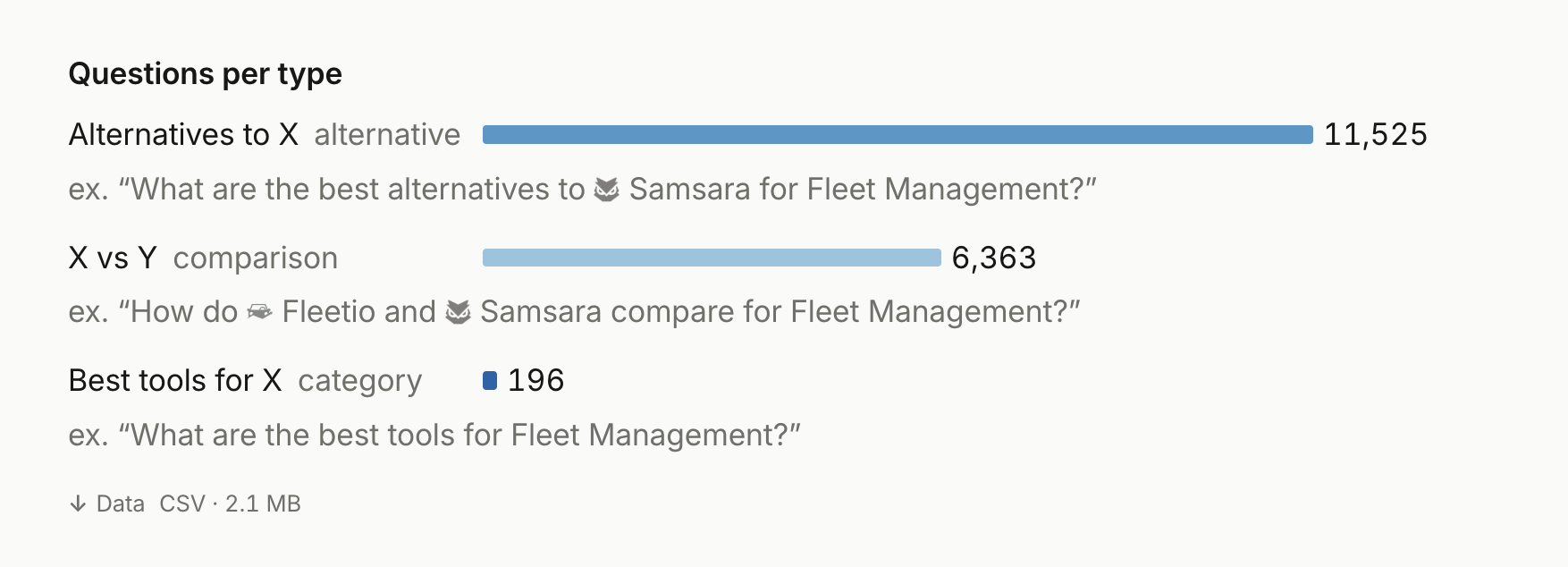
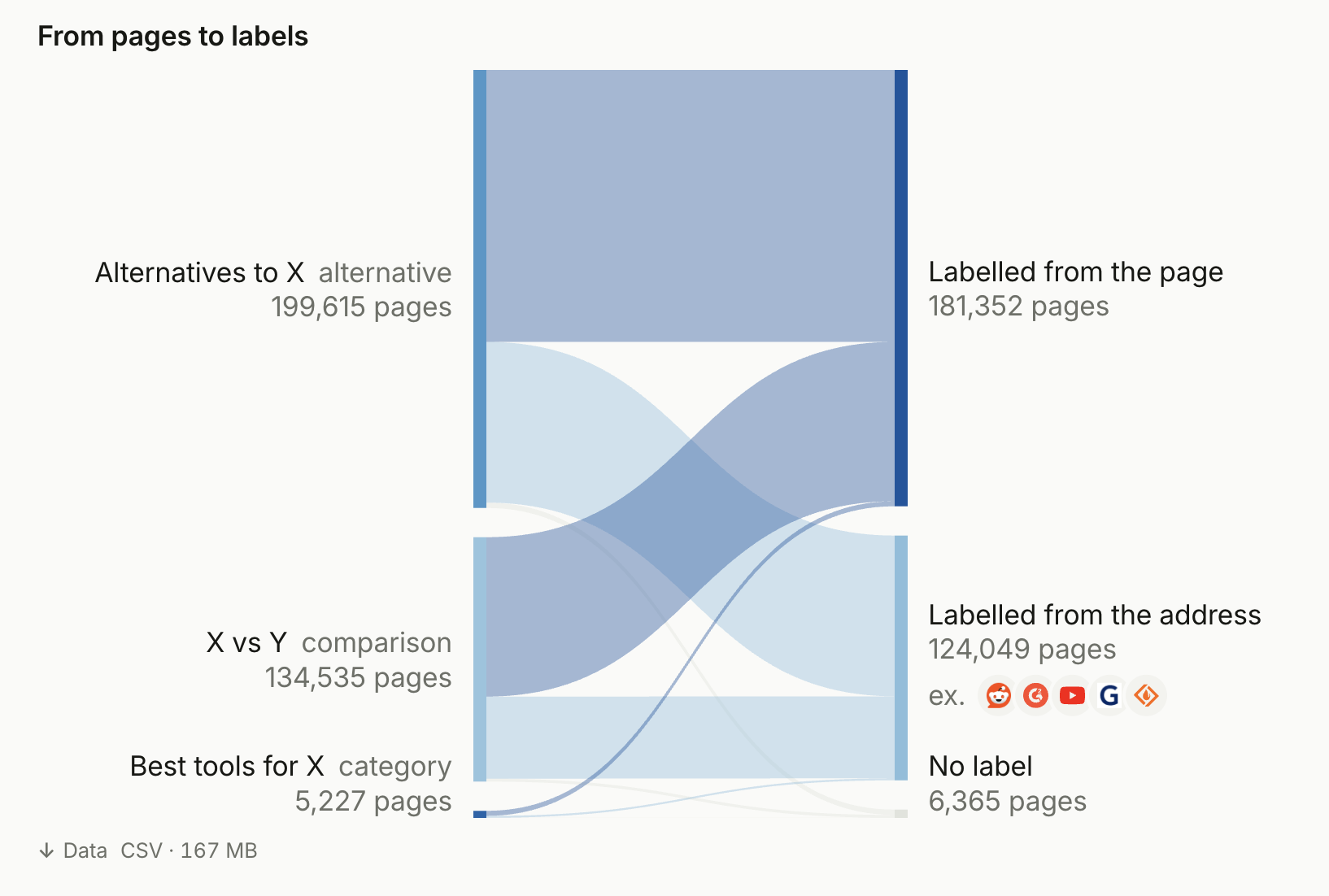
We started from a list of almost 6,000 software brands across 196 categories and wrote the kind of questions a buyer asks about them, such as “What are the best alternatives to Samsara for Fleet Management?” We asked every question on six platforms and collected every page their answers cite.
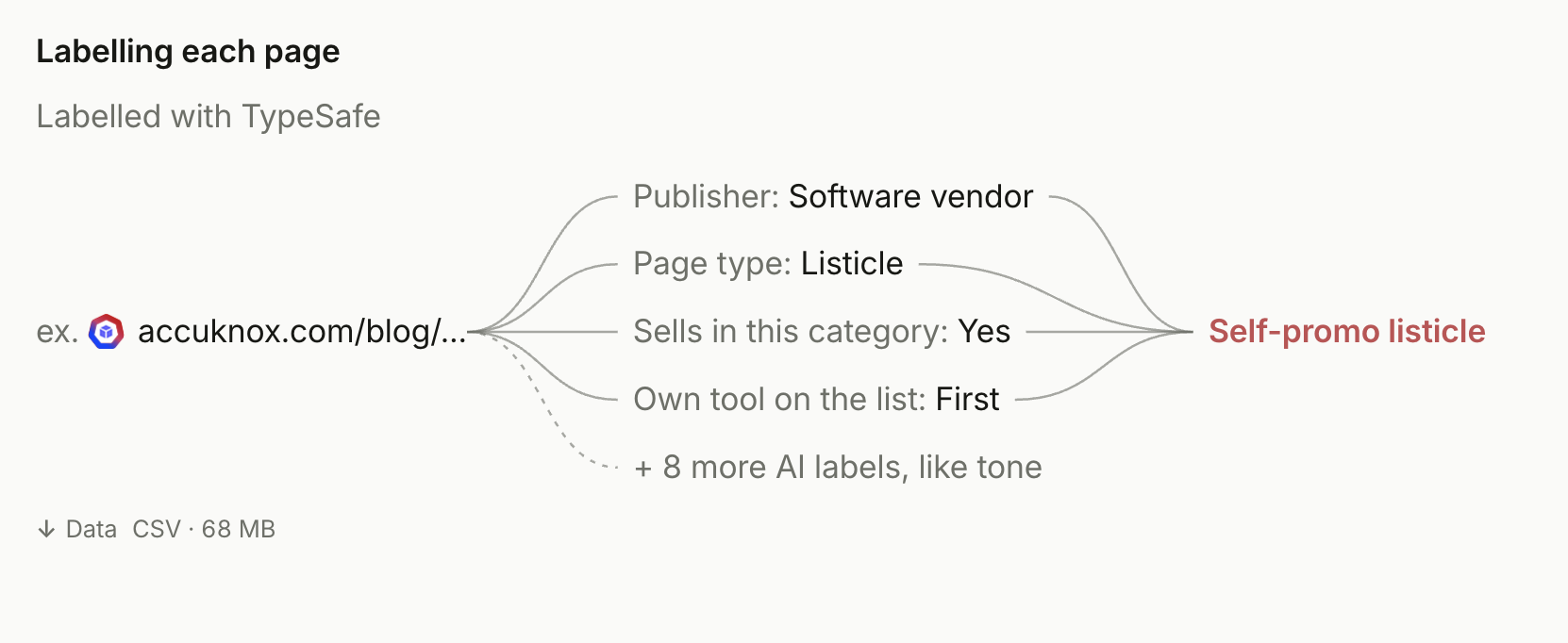
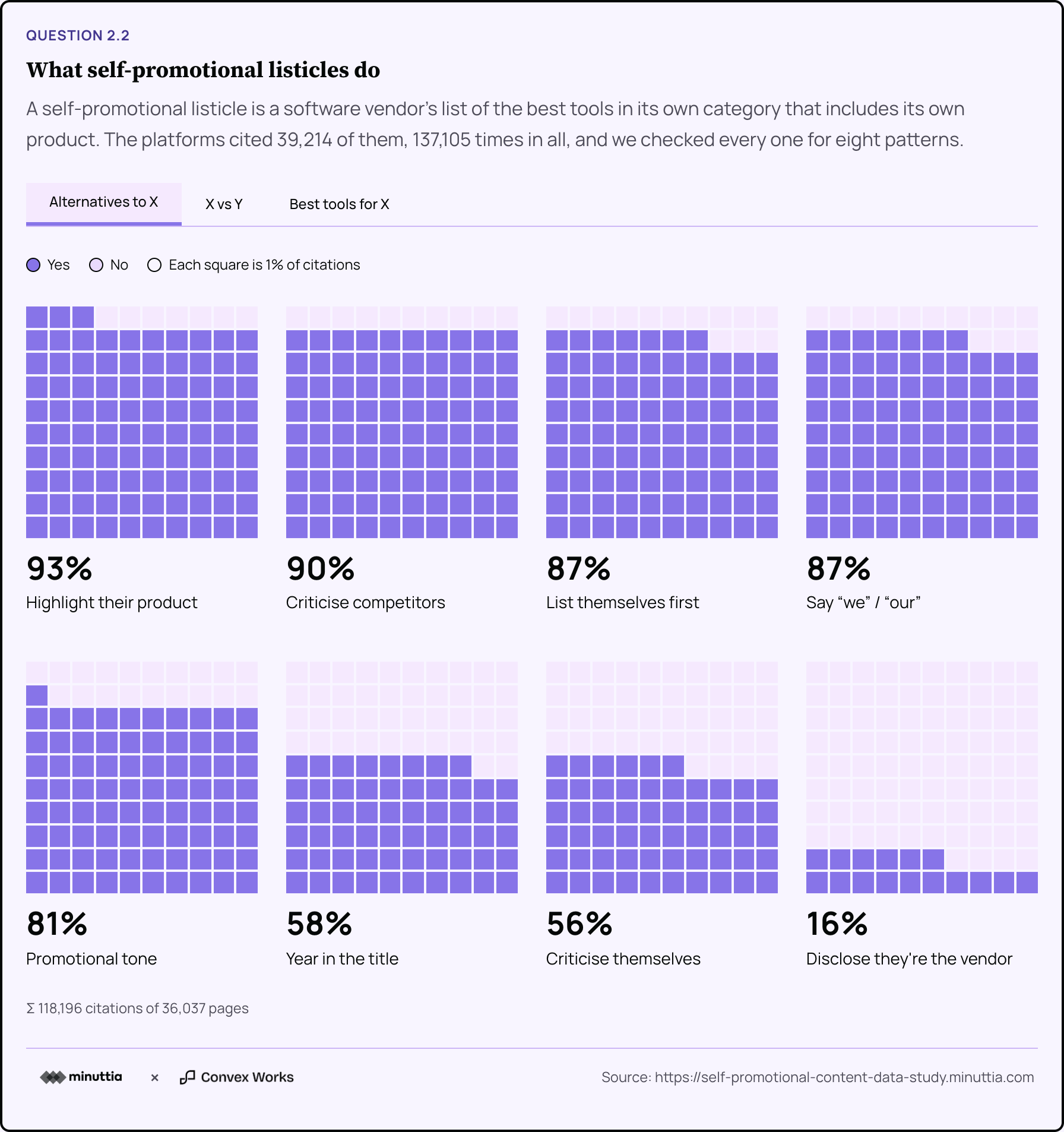
An AI model read each page and labelled it: who published it, what kind of page it is, and whether the publisher sells in that category. Sites that block crawlers, such as Reddit, G2 and YouTube, were labelled from their address. A list of the best tools counts as self-promotional when its publisher sells in the category and puts its own product on the list. We also checked every self-promotional list for eight patterns, such as whether it puts its own product first or says who wrote it.
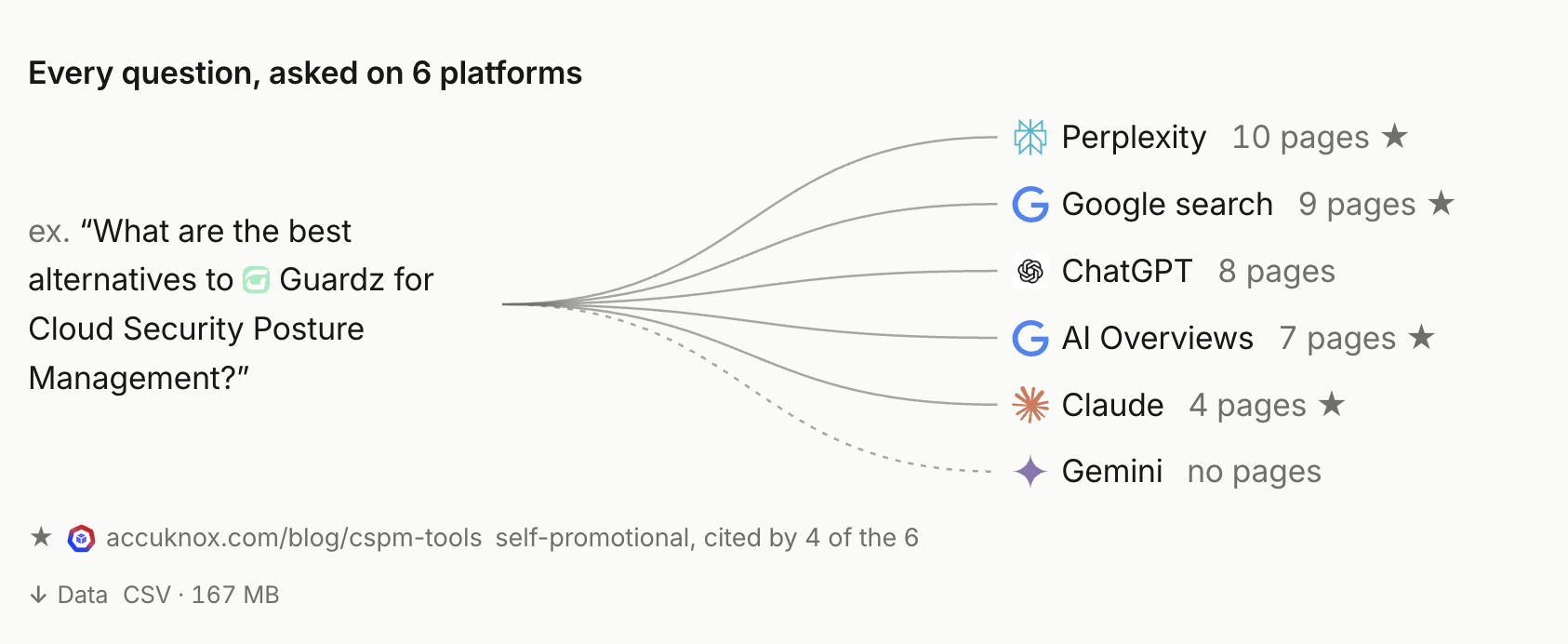
Minuttia published the study in October, a few weeks after we started, at self-promotional-content-data-study.minuttia.com. One of its findings: 34% to 47% of the lists the AI engines cite are self-promotional. Most of them put the vendor’s own product first, and only 16% say the vendor wrote them.
We build data studies for agencies and software companies. If you have a question that needs a lot of data to answer, we would like to hear it. Request an intro call.
The stack
| Data collection | |
|---|---|
| DataForSEO | Google results and AI Overviews, the ChatGPT and Gemini answers as people see them in the app, the cited pages and the rank of every cited website |
| Claude | Claude's answers with web search enabled |
| Perplexity | Perplexity's answers, sources and follow-up questions |
| Data enrichment | |
| Our brand dataset | 5,983 software brands in 196 categories, each matched to its website, with 23,987 name variants so a mention counts for the right company |
| G2 | Review counts and star ratings for 3,771 of the brands |
| TypeSafe Jev | Labelled every readable page, answer and ChatGPT search: publisher, page type and self-promotion patterns |
| Data quality & compliance | |
| OpenAI GPT | Checked Jev's labels on a sample of 600 and checked variants of brand names. Also judged which side each comparison answer favours. |
| Data ownership | |
| DVC | Every raw response kept as it was returned, with version history, in our own storage |
| DuckDB | One database per study, including the text of every answer |
| Data distribution & activation | |
| Interactive dashboards | Both studies online, with every chart's data to download and a page on the method |
| Custom systems | |
| Python | The collection and analysis pipeline: parallel, resumable jobs with spending limits, and one script per question |