Contracting for initiative: How governance shapes decisions

 University of Amsterdam
At Convex Works, I noticed that we often recommended larger changes than our clients’ employees. This led me to study whether employment contracts and knowledge specific to a company affect the changes people recommend.
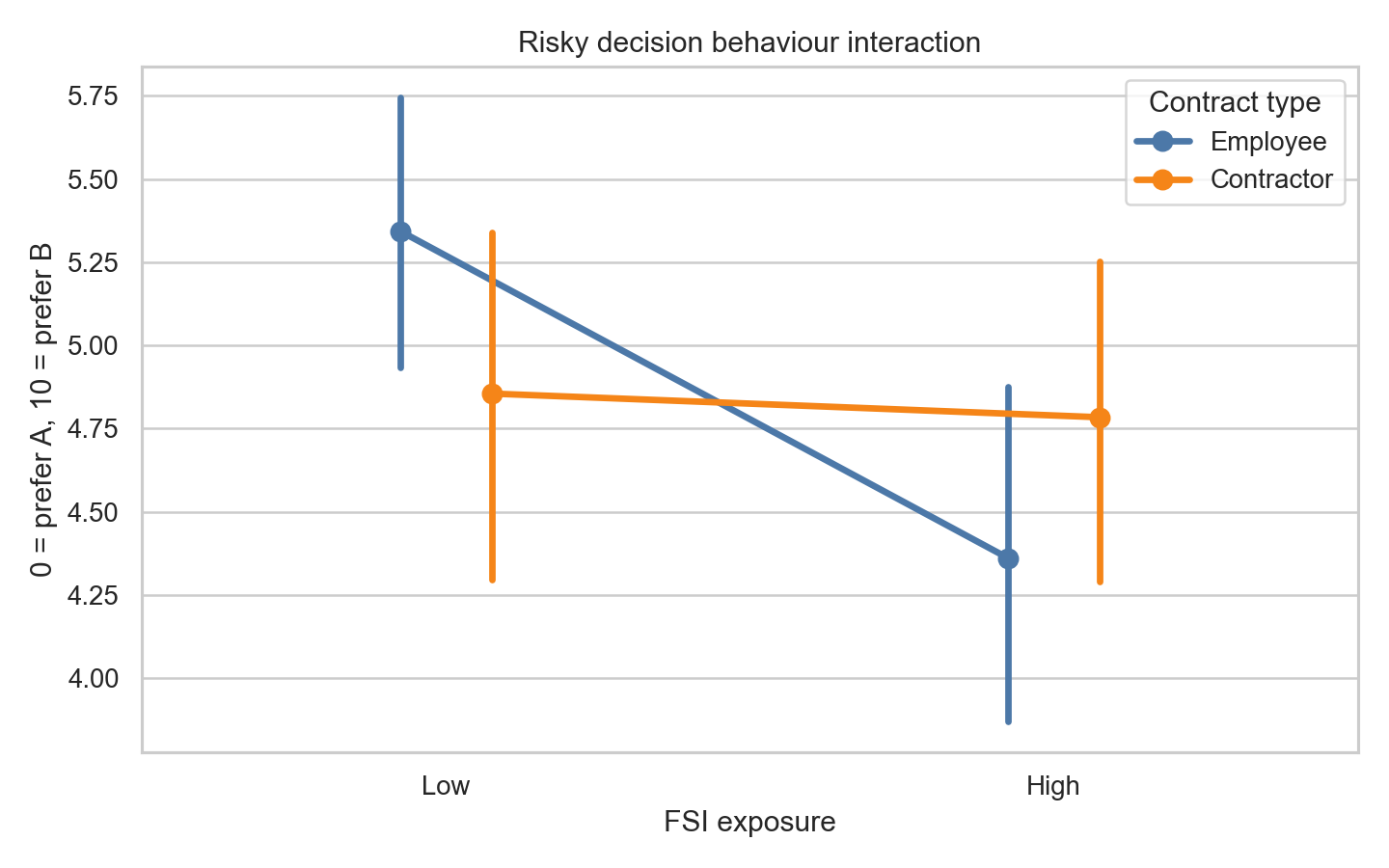
Employees and contractors spend time learning a company’s systems and processes. Some of that knowledge has little use at another company. The study tests whether having more of this knowledge makes people more cautious about recommending changes, and whether their contract type makes a difference.
The study uses transaction cost theory to explain how contracts and company-specific knowledge can create dependence on a company. Behavioural decision-making research provides the basis for testing whether people’s perception of risk helps explain their recommendations.
I recruited people with recent work experience through Prolific for an online experiment. Participants were randomly assigned employee or contractor roles at a fictional software company, with either little or a lot of company-specific knowledge. Everyone considered the same three customer-onboarding problems. They recommended smaller improvements or larger changes and rated the risks of the larger changes.